

Overview
Masjid al-Haram is the great mosque that surrounds the Kaaba in Makkah. Muslims all over the world face it in prayer, and the rites of Umrah — tawaf around the Kaaba and sa’i between Safa and Marwa — take place within it.
History
In the Prophet’s ﷺ time the sanctuary was an open area around the Kaaba. Historical sources record that the caliphs Umar ibn al-Khattab and Uthman ibn Affan enlarged it and built enclosing walls, and later dynasties — Umayyad, Abbasid, Mamluk and Ottoman — rebuilt and extended it. The Ottoman-era domed arcades still form part of the mosque. From the mid-20th century the Saudi state carried out several major expansions, which is why the mosque today covers a vastly larger area than in earlier centuries.
Significance
The Qur’an commands believers to turn their faces towards al-Masjid al-Haram in prayer (Qur’an 2:144) and names it as the starting point of the Prophet’s night journey (Qur’an 17:1). In an authentic hadith the Prophet ﷺ said that one should not set out on a special journey except to three mosques — al-Masjid al-Haram, his own mosque in Madinah and al-Masjid al-Aqsa (Sahih al-Bukhari 1189). He also said that a prayer in his mosque is better than a thousand prayers elsewhere except al-Masjid al-Haram (Sahih al-Bukhari 1190).
What is inside
The mosque contains the Kaaba, Maqam Ibrahim, the Hijr (Hatim), the Zamzam Well and the covered galleries of Safa and Marwa.
Map
Visiting information
Open 24 hours for worship. Umrah pilgrims enter in ihram and perform tawaf and sa'i. Entry to Makkah is for Muslims only. Crowd-management rules (routes, gates and some permits during peak seasons) are set by the General Authority for the Affairs of the Two Holy Mosques and may change — follow official signage and the Nusuk app.
Related Ziyarat locations

Kaaba
The cube-shaped House of Allah at the centre of Masjid al-Haram — the qibla of all Muslims.
Read history & details →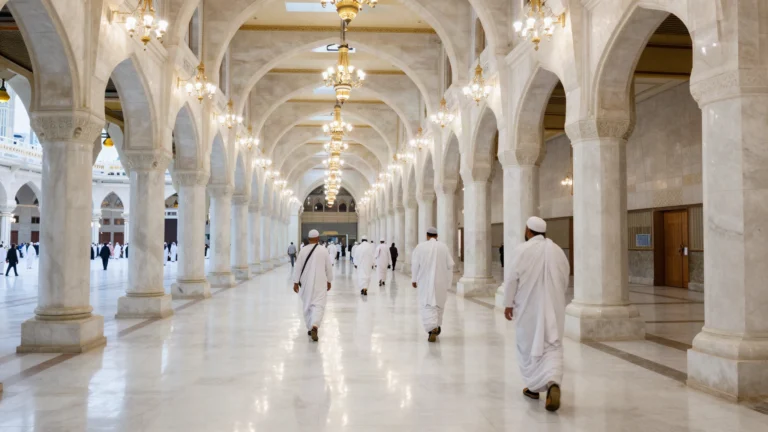
Safa and Marwa
The two hills between which pilgrims perform sa'i, commemorating Hajar's search for water.
Read history & details →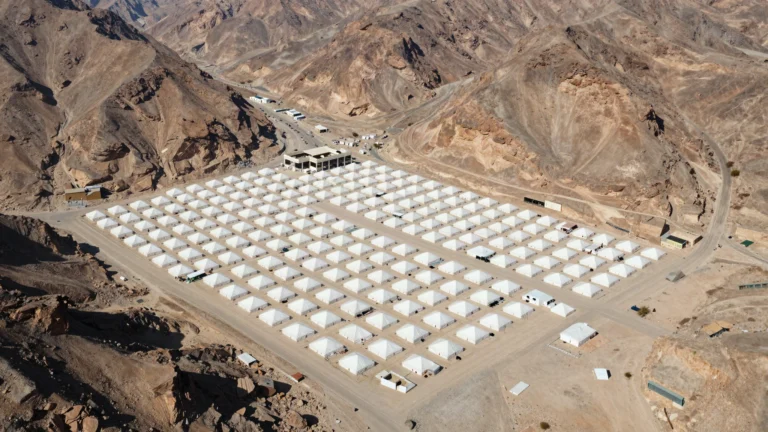
Mina
The valley of tents east of Makkah where Hajj pilgrims stay during the days of Hajj and stone the Jamarat.
Read history & details →
Maqam Ibrahim
The stone associated with the Prophet Ibrahim, standing in a gilded enclosure facing the Kaaba door.
Read history & details →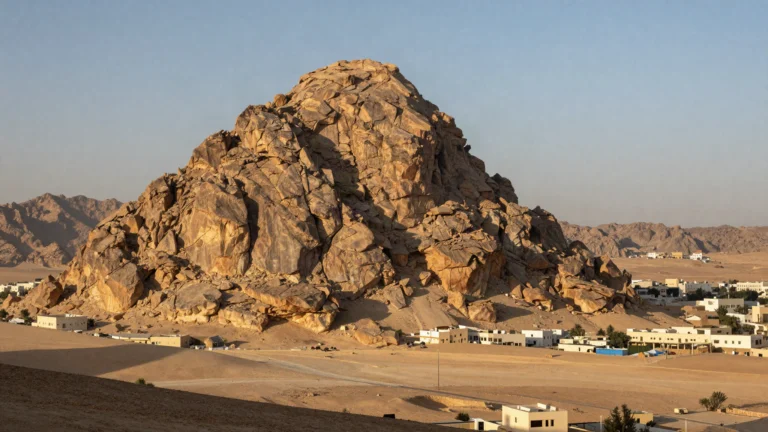
Jabal Thawr
The mountain south of Makkah whose cave sheltered the Prophet ﷺ and Abu Bakr during the Hijrah.
Read history & details →
Jabal al-Nour
The 'Mountain of Light' in Makkah, containing the Cave of Hira where the first revelation of the Qur'an came.
Read history & details →Related Ziyarat tours & packages
Group Umrah
Organised Umrah for mosques, communities and families travelling together.
View details →Premium Umrah Package
Premium hotels near the Haram, private vehicles and personalised Ziyarat.
View details →Standard Umrah Package
Comfortable hotels closer to the Haram, private transfers and guided Ziyarat.
View details →Visit Masjid al-Haram with ZiyaraWay
Private and group Ziyarat tours with transport and guidance.
Book a Ziyarat tour Ask on WhatsAppSources & references
- Qur'an 2:144 — https://quran.com/2/144
- Qur'an 17:1 — https://quran.com/17/1
- Sahih al-Bukhari 1189 — https://sunnah.com/bukhari:1189
- Sahih al-Bukhari 1190 — https://sunnah.com/bukhari:1190
- Exhibition of the Two Holy Mosques Architecture — https://www.visitsaudi.com/en/makkah/attractions/exhibition-of-the-two-holy-mosques-architecture
Historical reports sometimes differ; where they do, this page notes it. Please consult qualified scholars for religious rulings. Visiting rules and opening times are set by the Saudi authorities and may change.
Leave a Reply