

Overview
The Kaaba is the cube-shaped building at the centre of Masjid al-Haram. It is the qibla — the direction every Muslim faces in prayer — and pilgrims circle it seven times in tawaf.
History
The Qur’an describes the Prophet Ibrahim (Abraham) and his son Ismail raising the foundations of the House (Qur’an 2:127) and calls it the first House of worship established for mankind (Qur’an 3:96). Before Islam the Quraysh rebuilt the Kaaba; the sirah literature records that the young Muhammad ﷺ, before prophethood, settled a dispute over who would replace the Black Stone. After the conquest of Makkah in 8 AH (630 CE) the idols around the Kaaba were removed. The building has been repaired and rebuilt several times since, and it is covered by the black embroidered kiswah, renewed every year.
Significance
Allah says: “And [mention] when We made the House a place of return for the people and [a place of] security” (Qur’an 2:125). Tawaf around the Kaaba is a pillar of both Umrah and Hajj.
Features
Features include the Black Stone (al-Hajar al-Aswad) set in its eastern corner, the Yemeni corner, the door, the Multazam between the Black Stone and the door, and the semi-circular Hijr (Hatim). Maqam Ibrahim stands facing its door.
Map
Visiting information
Tawaf can be performed at any time on the ground floor (mataf) or on the upper levels. Access to the ground-floor mataf may be restricted to pilgrims in ihram during busy periods. Touching the Black Stone is not obligatory — pointing towards it is sufficient when crowded.
Related Ziyarat locations

Jabal al-Nour
The 'Mountain of Light' in Makkah, containing the Cave of Hira where the first revelation of the Qur'an came.
Read history & details →
Makkah Museums
Museums and exhibitions in Makkah on the history of the Two Holy Mosques, the Kaaba's kiswah and the revelation.
Read history & details →
Muzdalifah
The open area between Arafat and Mina where Hajj pilgrims spend the night after the Day of Arafah.
Read history & details →
Arafat
The plain where Hajj pilgrims stand on 9 Dhul-Hijjah — the essential pillar of Hajj — including Jabal al-Rahmah.
Read history & details →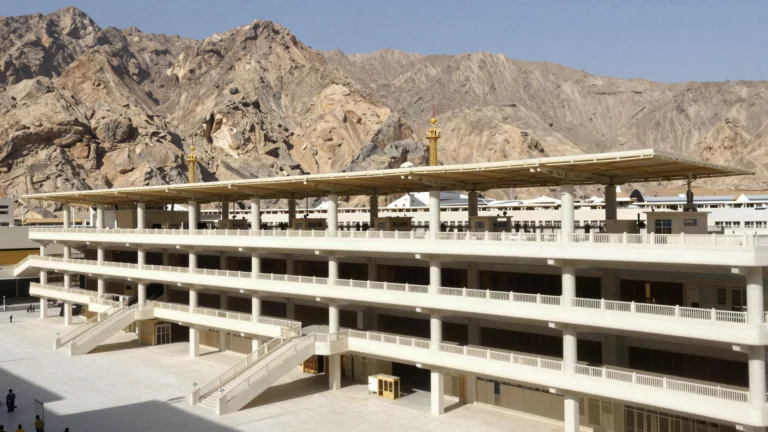
Jamarat
The three stone pillars in Mina that Hajj pilgrims stone during the days of Hajj.
Read history & details →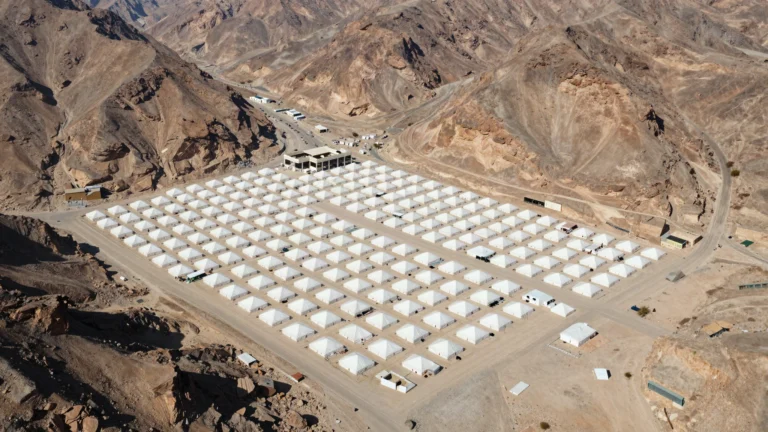
Mina
The valley of tents east of Makkah where Hajj pilgrims stay during the days of Hajj and stone the Jamarat.
Read history & details →Related Ziyarat tours & packages
Group Umrah
Organised Umrah for mosques, communities and families travelling together.
View details →Premium Umrah Package
Premium hotels near the Haram, private vehicles and personalised Ziyarat.
View details →Standard Umrah Package
Comfortable hotels closer to the Haram, private transfers and guided Ziyarat.
View details →Visit Kaaba with ZiyaraWay
Private and group Ziyarat tours with transport and guidance.
Book a Ziyarat tour Ask on WhatsAppSources & references
- Qur'an 2:125–127 — https://quran.com/2/125-127
- Qur'an 3:96–97 — https://quran.com/3/96-97
- Qur'an 22:26–29 — https://quran.com/22/26-29
- Kiswa: King Abdulaziz Complex for the Holy Kaaba Kiswa (see Makkah Museums page)
Historical reports sometimes differ; where they do, this page notes it. Please consult qualified scholars for religious rulings. Visiting rules and opening times are set by the Saudi authorities and may change.
Leave a Reply